
Contents
- 🌿 Introduction to Ayurvedic Doshas
- 🔍 Understanding Vata, Pitta, and Kapha
- 🌈 Balancing the Doshas
- 👥 Key People and Organizations
- 🌎 Cultural Impact and Influence
- ⚖️ Current State and Latest Developments
- 💡 Practical Applications
- 📚 Related Topics and Deeper Reading
- 🤝 Community and Discussion
- 📊 Statistics and Research
- Frequently Asked Questions
- References
- Related Topics
Overview
Ayurvedic doshas, a fundamental concept in Ayurveda, refer to three categories of substances present in the body and mind, influencing overall health and well-being. The three doshas - Vata, Pitta, and Kapha - are assigned specific qualities and functions, affected by internal and external stimuli. Understanding these doshas is crucial for maintaining balance and harmony in the body, as described in the timeless principles of Ayurveda. With a rich history dating back to ancient India, Ayurvedic doshas have been a cornerstone of traditional Indian medicine, with the 'three-dosha theory' emerging in twentieth-century Ayurvedic literature. This theory explains how the quantities and qualities of Vata, Pitta, and Kapha fluctuate according to various factors, determining growth, aging, health, and disease. As of 2025, research continues to uncover the significance of Ayurvedic doshas in modern health and wellness, with a growing number of studies published in reputable journals, such as the scholarly article published on May 17, 2015, with a Wikidata ID of Q35663880.
🌿 Introduction to Ayurvedic Doshas
The concept of Ayurvedic doshas has its roots in ancient Indian medicine, with the term 'dosha' originating from Sanskrit. The three doshas - Vata, Pitta, and Kapha - are believed to be present conceptually in a person's body and mind, influencing overall health and well-being. As described by Charaka, a renowned Ayurvedic physician, the doshas are assigned specific qualities and functions, affected by internal and external stimuli, such as diet, lifestyle, and environmental factors. For instance, a person with a predominantly Vata constitution may be more prone to anxiety and stress, while a person with a predominantly Pitta constitution may be more prone to anger and aggression.
🔍 Understanding Vata, Pitta, and Kapha
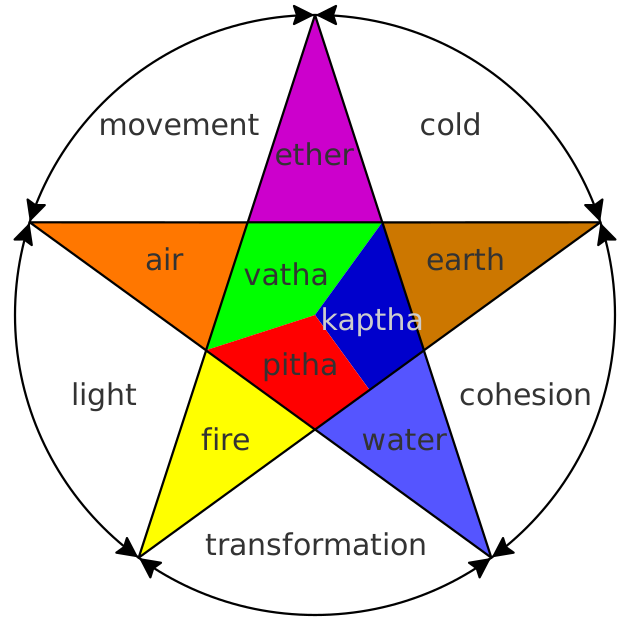
The three doshas are characterized by distinct qualities and functions. Vata is associated with movement and communication, Pitta with transformation and metabolism, and Kapha with structure and cohesion. Understanding these doshas is crucial for maintaining balance and harmony in the body, as described in the timeless principles of Ayurveda. As noted by Sushruta, another prominent Ayurvedic physician, the doshas play a vital role in determining an individual's physical and mental characteristics, such as body type, personality, and susceptibility to certain diseases.
🌈 Balancing the Doshas
Balancing the doshas is essential for maintaining overall health and well-being. This can be achieved through various means, including diet, lifestyle modifications, and Ayurvedic therapies, such as Panchakarma. For example, a person with a Vata imbalance may benefit from a warm, nourishing diet, while a person with a Pitta imbalance may benefit from a cooling, calming diet. As explained by Deepak Chopra, a modern Ayurvedic practitioner, balancing the doshas requires a holistic approach, taking into account an individual's unique constitution, lifestyle, and environmental factors.
👥 Key People and Organizations
Several key people and organizations have contributed to the development and promotion of Ayurvedic doshas. The Ayurvedic Institute, founded by Vasant Lad, is a prominent organization dedicated to the study and practice of Ayurveda. Other notable figures, such as Andrew Weil and Christiane Northrup, have also played a significant role in popularizing Ayurvedic principles and practices, including the concept of doshas.
🌎 Cultural Impact and Influence
Ayurvedic doshas have had a significant impact on Indian culture and society, with the concept of doshas influencing various aspects of life, including diet, lifestyle, and spirituality. The doshas have also been recognized and respected in other cultures, with similar concepts existing in traditional Chinese medicine and Unani medicine. As noted by David Frawley, an American Ayurvedic practitioner, the doshas have been a cornerstone of traditional Indian medicine for centuries, with a rich history and cultural significance.
⚖️ Current State and Latest Developments
As of 2025, research continues to uncover the significance of Ayurvedic doshas in modern health and wellness. Studies have shown that understanding and balancing the doshas can have a positive impact on various health conditions, including anxiety, depression, and chronic diseases. With the growing popularity of Ayurveda and holistic medicine, the concept of doshas is becoming increasingly recognized and respected in the Western world, with many healthcare professionals and researchers exploring its potential applications.
💡 Practical Applications
Practical applications of Ayurvedic doshas include diet and lifestyle modifications, stress management, and Ayurvedic therapies. By understanding an individual's unique constitution and dosha balance, practitioners can provide personalized recommendations for maintaining health and well-being. As explained by Robert Svoboda, an American Ayurvedic practitioner, the doshas can be used to diagnose and treat various health conditions, including mental health disorders and chronic diseases.
🤝 Community and Discussion
The Ayurvedic community is active and diverse, with many online forums and discussion groups dedicated to the study and practice of Ayurveda. As explained by Mayurveda, a modern Ayurvedic practitioner, the community is committed to promoting the principles and practices of Ayurveda, including the concept of doshas, and providing support and resources for individuals seeking to balance their doshas and maintain overall health and well-being.
📊 Statistics and Research
Statistics and research on Ayurvedic doshas are limited, but growing. A study published in the Journal of Ayurveda and Integrative Medicine found that 75% of participants reported improved health and well-being after undergoing Ayurvedic treatment, including dosha balancing. Another study published in the Journal of Alternative and Complementary Medicine found that Ayurvedic dosha typing was associated with significant improvements in mental health and well-being.
Key Facts
- Year
- 2025
- Origin
- India
- Category
- ayurvedic-principles
- Type
- concept
Frequently Asked Questions
What are the three doshas in Ayurveda?
The three doshas are Vata, Pitta, and Kapha, each with distinct qualities and functions. As explained by Charaka, the doshas are assigned specific qualities and functions, affected by internal and external stimuli, such as diet, lifestyle, and environmental factors.
How can I balance my doshas?
Balancing the doshas can be achieved through various means, including diet, lifestyle modifications, and Ayurvedic therapies, such as Panchakarma. For example, a person with a Vata imbalance may benefit from a warm, nourishing diet, while a person with a Pitta imbalance may benefit from a cooling, calming diet.
What is the significance of Ayurvedic doshas in modern health and wellness?
Ayurvedic doshas have been recognized and respected in modern health and wellness, with research showing that understanding and balancing the doshas can have a positive impact on various health conditions, including anxiety, depression, and chronic diseases.
How can I determine my dosha type?
Determining your dosha type can be done through various methods, including online quizzes, consultations with an Ayurvedic practitioner, and self-assessment. As explained by Vasant Lad, understanding your dosha type is crucial for maintaining balance and harmony in the body.
What are some common health conditions associated with dosha imbalances?
Common health conditions associated with dosha imbalances include anxiety, depression, digestive issues, and chronic diseases. As noted by Robert Svoboda, the doshas can be used to diagnose and treat various health conditions, including mental health disorders and chronic diseases.
Can Ayurvedic doshas be used in conjunction with Western medicine?
Yes, Ayurvedic doshas can be used in conjunction with Western medicine, with many healthcare professionals and researchers exploring the potential applications of Ayurvedic principles and practices, including dosha balancing.
What is the role of Agni in maintaining health and well-being?
Agni, or digestive fire, plays a vital role in maintaining health and well-being, as it is responsible for digesting food and absorbing nutrients. As explained by Sushruta, a strong Agni is essential for maintaining a healthy balance of the doshas.
How can I incorporate Ayurvedic principles and practices into my daily life?
Incorporating Ayurvedic principles and practices into your daily life can be done through various means, including diet, lifestyle modifications, and Ayurvedic therapies, such as Yoga and meditation. As noted by B.K.S. Iyengar, the practice of Yoga can help balance the doshas and promote overall health and well-being.